

Understanding Persistent Moisture
Even after visible damage is repaired, hidden pockets of moisture can remain trapped within building materials. Contributing factors include:
- Incomplete drying during initial remediation
- Poor ventilation or airflow
- Remaining water source (leaks, spills, or groundwater)
- Condensation due to temperature differentials
Hidden pockets of moisture can remain trapped within building materials. For more on proper documentation, see our Water Damage Insurance Claims: Multi-Tenant Documentation Guide.
Step-by-Step Approach to Lower Moisture Levels
Reassess the Area: Conduct a thorough inspection using a calibrated moisture meter. Document the following:
- Exact moisture readings at multiple points
- Types of materials showing elevated levels (wood, drywall, concrete)
- Ambient conditions: temperature and relative humidity
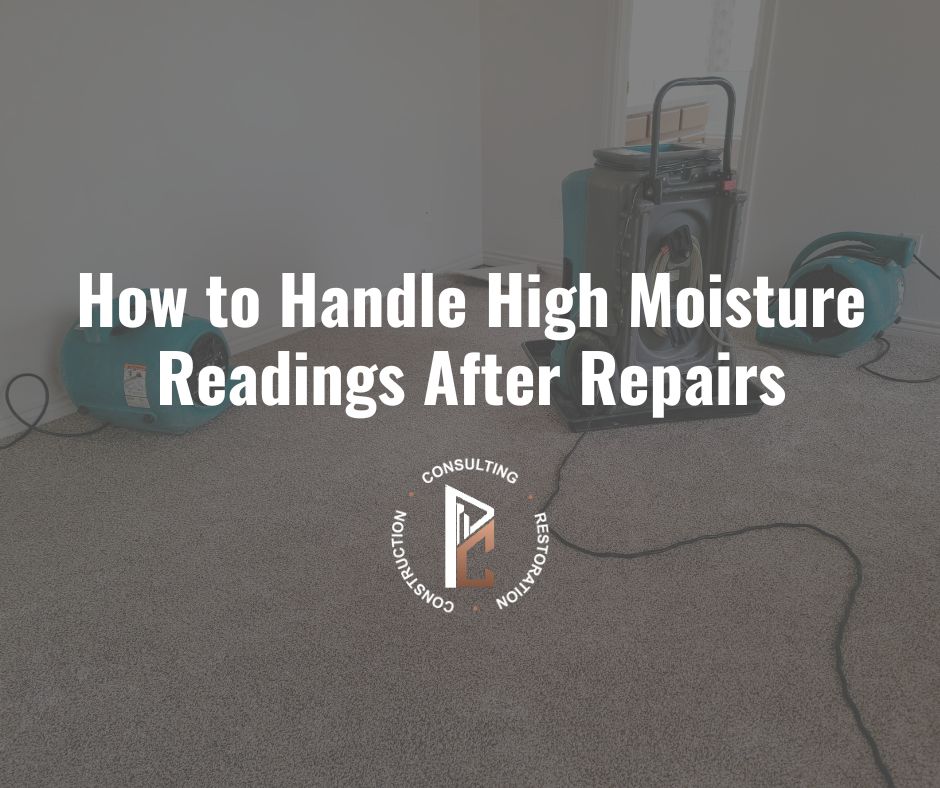
Enhance Drying Techniques: Implement a combination of the following methods to accelerate moisture removal:
- High-capacity air movers positioned to create crossflow
- Desiccant or refrigerant dehumidifiers sized for the affected volume
- Controlled heating (portable heaters) to raise surface temperatures
- Learn why early action is critical in The First 48 Hours After Commercial Water Damage: Critical Actions.
Seal and Isolate: If moisture pockets persist in inaccessible cavities:
- Use injection ports to introduce drying agents or sealants
- Install temporary containment barriers (poly sheeting) to focus airflow
Monitor Progress: Establish a monitoring schedule to verify drying progress:
-
-
- Daily moisture meter readings at fixed locations
- Record ambient humidity and temperature twice daily
- Adjust equipment placement or capacity based on data
-
Address Residual Problems: If readings remain above acceptable thresholds (typically <20% for wood, <5% for concrete):
- Investigate hidden leaks or condensation sources
- Replace irreparably saturated materials
- Consult a moisture remediation specialist for advanced solutions
Preventing Future Moisture Issues
Implementing best practices during and after repairs reduces the risk of recurrence:
- Maintain proper ventilation in repaired zones
- Install vapor barriers where applicable
- Regularly service and inspect plumbing, roofing, and HVAC systems
- Use moisture-resistant building materials in high-risk areas
Conclusion
Persistent high moisture readings after repairs demand a systematic approach: reassess, intensify drying efforts, monitor closely, and address any lingering issues. By combining proper equipment, diligent monitoring, and preventive measures, you can protect your property from long-term damage and ensure a truly dry, safe environment.
For expert help with persistent moisture or advanced drying solutions, contact our team.