

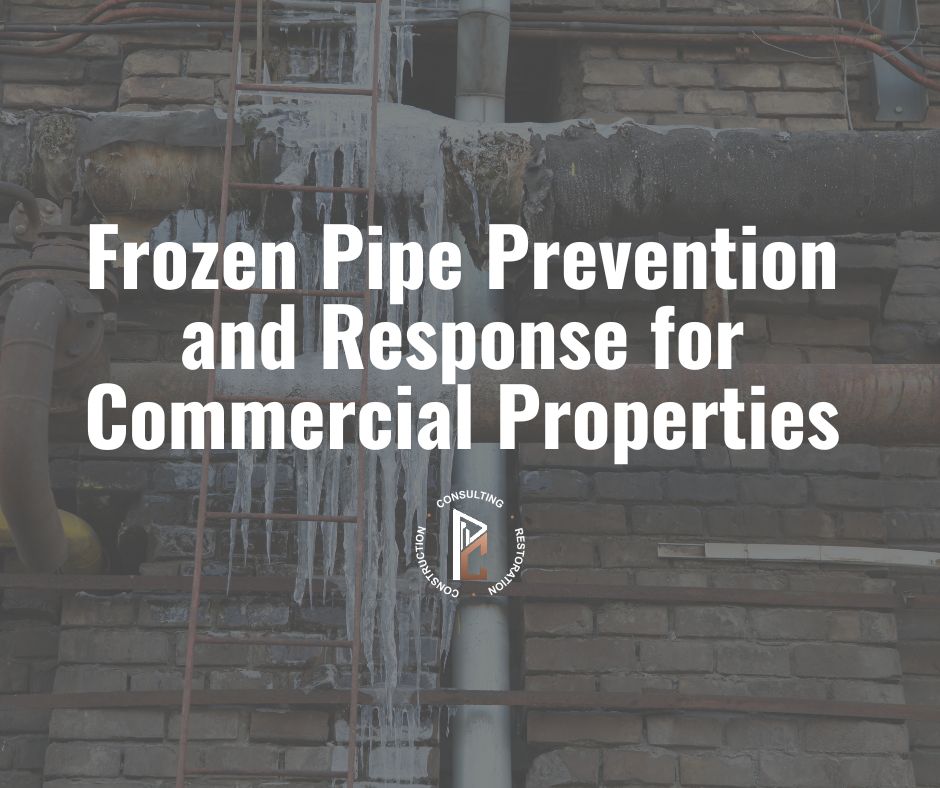
A single burst pipe during freezing weather can shut down your commercial operation for days or even weeks. In our decade of commercial restoration work at Pro Commercial Construction & Consulting (PCCC), we’ve responded to countless frozen pipe emergencies across the country—and we’ve learned that the properties that fare best are those that prepare before temperatures drop.
The damage from frozen pipes extends far beyond the initial burst. Water flooding through multiple floors, damaged inventory, compromised electrical systems, and extended business closures can turn a preventable incident into a six-figure loss. Most frozen pipe damage is entirely preventable with the right strategies and preparation.
Why Frozen Pipes Threaten Commercial Properties
When water freezes inside pipes, it expands with tremendous force—enough to crack metal pipes and rupture joints. The real damage occurs when temperatures rise and that ice melts, releasing hundreds or thousands of gallons of water into your building.
Commercial properties face unique frozen pipe risks:
- Scale of Damage: A burst pipe in a multi-story building can flood multiple floors before anyone notices, especially during off-hours or weekends.
- Complex Plumbing Systems: Extensive plumbing networks with pipes running through unheated areas make vulnerable points harder to identify and protect.
- Business Interruption: Commercial frozen pipe damage means lost revenue, displaced employees, and potentially breached contracts.
- After-Hours Vulnerability: Many commercial properties are unoccupied nights and weekends—exactly when temperatures drop lowest and when a burst pipe can go undetected for hours.
We’ve seen restoration costs ranging from tens of thousands to hundreds of thousands of dollars after frozen pipe incidents, including repair costs, lost business revenue, and temporary relocation expenses.
High-Risk Areas in Commercial Buildings
Not all areas face equal frozen pipe risk. We consistently see certain vulnerable locations:
- Exterior Walls: Pipes along exterior walls, especially north-facing walls, have minimal insulation from outside temperatures
- Unheated Spaces: Basements, crawl spaces, attics, and mechanical rooms can reach freezing temperatures
- Loading Docks and Warehouses: Large bay doors that open frequently allow cold air to enter
- Roof and Ceiling Spaces: Pipes in dropped ceilings or roof spaces may have inadequate insulation
- Sprinkler Systems: Fire suppression systems in unheated areas can freeze and burst, causing extensive damage
- Outdoor Fixtures: Hose bibs, irrigation systems, and exterior plumbing need special attention
Understanding your property’s vulnerable points is the first step in effective prevention.
Winter Preparation Timeline
Frozen pipe prevention requires advance planning and staged preparation:
Fall (September-October):
- Schedule comprehensive plumbing inspection with a licensed commercial plumber
- Identify all vulnerable pipe locations
- Install insulation on exposed pipes
- Test building automation systems and temperature sensors
- Verify all staff know where shut-off valves are located
Early Winter (November-December):
- Complete remaining insulation or heat trace installation
- Test all heating systems in mechanical rooms and unheated spaces
- Seal gaps around doors, windows, and wall penetrations
- Set minimum temperature thresholds in your building management system
- Confirm 24/7 emergency contact procedures
During Cold Weather Events:
- Monitor forecasts and activate enhanced protocols when temperatures will drop below 20°F
- Increase building inspections during extreme cold
- Allow faucets in vulnerable areas to drip slightly during coldest nights
- Never lower thermostats below 55°F in any area
Comprehensive Preventive Measures
Based on our experience, these prevention strategies provide the most effective protection:
- Insulation: Wrap all exposed pipes in unheated areas with foam pipe sleeves or fiberglass insulation. In extremely cold climates, pipes may need multiple layers or combination approaches.
- Heat Trace Systems: Electric heat tape or cable systems maintain above-freezing temperatures along critical pipe runs. Modern systems include thermostatic controls that activate only when needed.
- Building Envelope Integrity: Seal gaps around doors, windows, and wall penetrations where pipes enter or exit the building. The Department of Energy provides guidelines on air sealing commercial buildings to improve energy efficiency while protecting against cold air infiltration.
- Temperature Management: Maintain a minimum indoor temperature of 55°F in all zones, even when spaces are unoccupied. Commercial building temperature management during winter months should follow ASHRAE standards for occupied and unoccupied spaces to balance energy efficiency with freeze protection.
- Automated Monitoring Systems: Deploy temperature sensors and leak detectors linked to your building management system for real-time alerts. Modern systems can send alerts when temperatures drop to dangerous levels or when water is detected.
- Regular Professional Inspections: Schedule inspections with a licensed commercial plumber to identify vulnerable pipe sections before winter.
Emergency Response: When Pipes Freeze
Despite best prevention efforts, frozen pipes can still occur. Your response in the first minutes determines how much damage occurs.
Immediate Actions:
- Locate and Isolate: Close the main water shut-off valve immediately to minimize flooding
- Document Everything: Photograph ice buildup, frost lines, and any visible damage for insurance claims
- Assess Safety: Ensure there are no electrical hazards before attempting any thawing
Safe Thawing Procedures:
- Use low-heat sources: hair dryers, heat guns on low settings, or portable space heaters
- Never use open flames—we’ve seen property owners cause fires attempting to thaw pipes quickly
- Work from the faucet back toward the frozen section to allow melting ice to escape
Post-Thaw Inspection:
- Carefully inspect all joints, fittings, and pipe sections for leaks
- Place buckets under any drips and mark areas needing professional repair
- Apply epoxy putty or pipe repair clamps as temporary measures only
Professional Assessment: Contact a licensed commercial plumber for complete assessment, permanent repairs, and pressure testing. When frozen pipes burst, response time in the first 48 hours determines the extent of damage.
Insurance Considerations
Understanding your coverage before an incident prevents disputes and delays:
Coverage Requirements: Most commercial property insurance covers frozen pipe damage but includes requirements like maintaining minimum building temperatures and taking reasonable prevention measures.
Documentation Standards: Comprehensive documentation from the moment you discover the problem strengthens your claim position.
Business Interruption Coverage: May compensate for lost revenue if damage forces closure or relocation, but requires specific documentation.
Prevention Requirements: Some policies require specific prevention measures as conditions of coverage. Review your policy before winter.
Post-Incident Recovery
After a frozen pipe incident, systematic recovery prevents future problems:
- System Flush: Open all faucets and fixtures to purge air pockets and debris
- Comprehensive Inspection: Have a professional inspect your entire plumbing system
- Root Cause Analysis: Understand what allowed the pipes to freeze
- Plan Revision: Update your prevention plan based on what you learned
- Insurance Coordination: Working with experienced restoration professionals who understand insurance requirements can significantly improve your claim outcome
The True Cost of Frozen Pipe Damage
The financial impact extends beyond immediate repairs:
- Direct Repair Costs: Plumbing repairs, water extraction, structural drying, and restoration can range from thousands to hundreds of thousands of dollars depending on flooding extent
- Business Interruption: Lost revenue during closure and temporary relocation costs
- Inventory and Equipment Loss: Water damage to inventory, computers, and machinery
- Liability Exposure: Claims from affected tenants or injuries
- Reputation Impact: Business closures damage your reputation with customers and tenants
Property owners who invest in comprehensive prevention spend a fraction of what they would face in recovery costs.
Ongoing Maintenance and Staff Preparedness
Frozen pipe prevention is an ongoing maintenance priority:
- Staff Education: Train facility teams to recognize early freeze indicators: frost on pipes, reduced water flow, unusual noises, or unusually cold areas.
- Emergency Drills: Conduct biannual emergency shut-off and response drills. Everyone should know where shut-off valves are located.
- Service Agreements: Maintain active contracts with commercial plumbers and restoration specialists for priority response during cold weather emergencies.
- Documentation Updates: Keep current records of your plumbing system layout, vulnerable areas, and prevention measures installed.
- Seasonal Reviews: Review and update your prevention plan annually before each winter season.
Protect Your Commercial Property Before Winter Strikes
Frozen pipe prevention requires systematic preparation, ongoing maintenance, and rapid response when problems occur. The properties that avoid costly damage are those where owners and facility managers treat winter preparation as a critical priority.
At PCCC, our decade of commercial restoration experience has taught us that the most successful frozen pipe prevention programs combine robust physical protection—insulation, heat trace, and building envelope integrity—with smart monitoring systems and well-trained staff who know how to respond quickly when temperatures drop.
With winter weather already causing frozen pipe incidents, don’t wait for your property to be next. Take action now to prevent damage during the next freeze.
PCCC provides comprehensive frozen pipe emergency response and commercial water damage restoration services nationwide. If your property experiences frozen pipe damage, our team is ready to respond 24/7 to minimize damage and restore your operations quickly.
Contact PCCC for frozen pipe emergency response or winter preparation consultation:
- 24/7 Emergency Response: (866) 215-8048
- Professional Consultation: claims@pro-commercial.com
- Service Area: Nationwide coverage across all 50 states
Protect your investment and your operations—safeguard your commercial property before the next freeze.